Showing posts with label German. Show all posts

Tuesday, 22 January 2013

Vegan Mango and Passionfruit Strudel


There are a lot of desserts on my "work out how to make it vegan" list. I try and limit how often I make desserts though, so often the list doesn't get looked at for a long time. The monthly Sweet Adventures Blog Hop usually makes me get out my list and give one of them a go, although I'm not sure if that is always a good thing. This week I'm starting a new weights and exercise routine, along with a bit of an increase in protein intake and a definite decrease in dessert. This, obviously, is not a good start! Oh well. Wish me luck for the next 12 weeks of not making stuff like this!

SABH_13-01_Tropical-300

Strudel was one of the things on my list. I haven't eaten strudel for years! It wasn't hard to veganise the creamy filling. The secret, as with many vegan creamy things, is nuts. Soaked nuts can substitute almost any creamy thing you can imagine, and it works beautifully here. The fruits I normally associate with strudel are apple, apricot, peach and cherries. However, since the summer weather is in full swing here (it's been hot!) I thought I'd give it a summer tropical twist by using mango and passion fruit. The results were delectable!


Ingredients
1 cup raw blanched almonds
1/4 cup agave nectar
3 tbsp maple syrup
Zest and juice of 1 lemon (tip: zest lemon before you juice it!)
2 tsp vanilla extract
1/4 cup water
2 passionfruits
1/2 cup flaked or slivered almonds
1 mango, thinly sliced and skin removed
6 sheets filo pastry, thawed
1/2 cup vegan margarine (nuttelex), melted
Icing sugar, to dust


To Make
1. Soak the almonds over night, or for at least 4 hours.
2. Preheat oven to 170 degrees.
3. Place the drained soaked almonds, agave nectar, maple syrup, lemon zest, lemon juice, vanilla extract and water in a food processor. Process until completely smooth, scraping down the sides often. This may take a little while, depending on your food processor. Should take between 5 and 8 minutes to get it completely smooth.
4. Remove the pulp from the passion fruits and fold the pulp through the creamy almond mixture.
5. Slice the flesh off the mango (you can suck on the seed while you cook), remove the skin and slice.
6. Lay out two sheets of filo next to each other with the edges overlapping (see pictures).  Brush all over with melted margarine and layer another two sheets on top. Layer with melted margarine again and add the last two pieces of filo (so you should have three layers all together).
7. Layer the almond cream in middle of one of the sheets of pastry (once again, see the picture). Top with sliced mangos and slivered/flaked almonds. Fold the bottom and edges over onto the filling and gently flip the strudel over and "roll" it up right to the end. You'll probably want an extra pair of hands to help you with this, as it's a little bit delicate. But if you rip the pastry a bit it doesn't matter, you'll hide it when you roll it all up.


8. Brush the top with the remaining melted margarine. Bake in the oven for about 15-20 minutes, or until the pastry is golden on top.
9. Remove from oven and allow to cool. You can serve it warm (let it sit for at least 15 minutes) or at room temperature (don't chill!), dust with icing sugar before serving.


Makes 1 strudel (serves about 6).


Wednesday, 31 October 2012

German Month: 9 German Inspired Vegan Recipes


Guten Tag - October (or Oktober) has been a delicious month for me here at Gormandize with A-dizzle & K-bobo, because it's been German food month. In fact, it's been difficult to decide what to make because there are so many wonderful things to try from Germany! Especially the desserts - wow the Germans know how to do dessert! I had about five other desserts shortlisted that I really wanted to try but if I had made all the things I wanted to then I would probably weigh about 5kg more than I do! Hopefully I might get a chance to try some of them at other times!

So settle in and get ready for cabbage, pickles, cherries and pancakes. Here is a recap of what I made:


~Savoury~

Rohkostsalat
A delicious cabbage and fruit salad with my own home made creamy vegan dressing! Looks unassuming but this salad was a huge hit with the guests at my German dinner night and a firm favourite of many. The light, crisp and fresh nature of it makes it a perfect hot weather salad and I predict it would be an absolute hit at any summer bbq. Or just for dinner on any given night. Check out the recipe here.

Rosenkohl in Bier
Sometimes simple things are the best. This side dish is fresh brussels sprouts cooked in beer, delicious and easy. Definitely a different take on your steamed or boiled sprouts. I recommend it, unless you really hate brussels sprouts and you don't like beer - in which case move on to the next one! Check out the recipe here.

Zwiebelkuchen
This delectable onion pie was a challenge to veganise, but boy was it worth it! It's more of a quiche than a pie (if you want to split hairs). But in the end it doesn't really matter what you call it - it's buttery crumbly pastry filled with creamy onion filling. It was also a huge hit at my German dinner party! Check out the recipe here.

German Potato Salad
This simple and easy salad was my favourite from the savoury recipes for this month. It looks plain and simple, but it is anything but boring! It is the perfect combination of flavours and I honestly could have eaten a whole bowl of it and been very, very happy! Try this version of potato salad next time you're asked to bring a salad! Check out the recipe here.

~Sweet~

De constructed Black Forest Cake
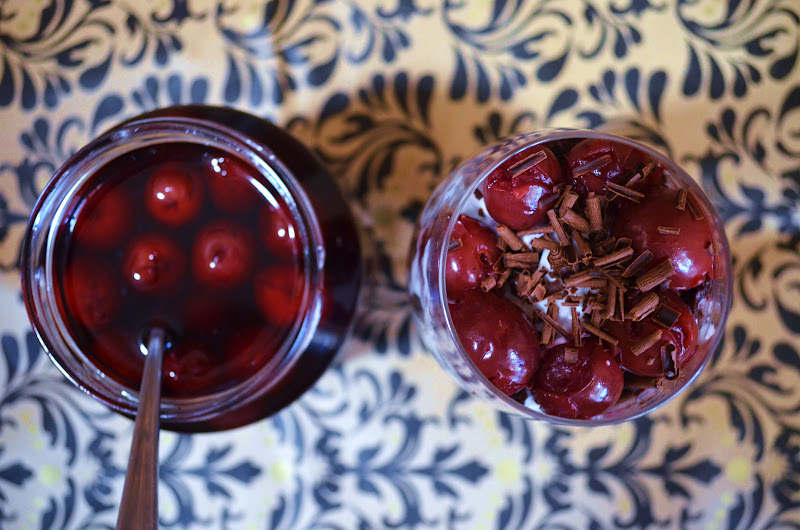
No German month is complete without black forest cake right? Well, sort of. This is what I like to call "Black Forest Mess", it's a delicious de constructed dessert of cake, cherries, cream and cherry brandy all smashed together in a glass - what's not to love? Fun to make and fun to eat! Check out the recipe here.


Frankfurter Kranz
Vanilla bundt cake layered with black cherry jam, covered in delicious rum buttercream and topped with crunchy sugared almonds? Yes? This recipe is not for the faint hearted, but if you have a mammoth sweet tooth then this is your new best friend. It's an absolutely amazing creation! Check out the recipe here.

Rote (und Grün) Grütze
A slightly different take on a classic German dish, this dessert is an easy vegan fruit jelly which combines rote grütze (red) with grün grütze, just to be extra fruity and colourful. You can just make the red one if you like, but it's fun with the green on top. Check out the recipe here.


~Pancakes~

Apple Pancakes
Pancakes get a little section of their own here because pancakes would traditionally be eaten for dessert in Germany, but I love pancakes for breakfast so I went ahead and made them for breakfast anyway. These apple pancakes were a great variation on my plain old pancakes. Check out the recipe here. 

Kaiserschmarrn
Last but most definitely not least - the kaiserschmarrn. This dish of torn up pancakes with delicious sweet apples really won my heart. At first I was worried that there was no sugar added to the recipe, but I needn't have worried! The sweetness of the apples was perfect and honestly this is a perfectly balanced breakfast or dessert. Check out the recipe here.


So, What Next?
Next month I will be exploring the wonderful cuisine of Indonesia - so keep your eyes on the blog for some delicious delights from my close northern neighbour!


Tuesday, 30 October 2012

Rote (und grün) Grütze (German Fruit Jelly)


My last offering from Germany - and it's a real winner! It's a dessert called rote grütze, an easy fruit dessert made from fresh red fruits with cornstarch to thicken. Rote is German for red, as this dessert is made with a mixture of red fruits. Traditionally, the main fruit used is red currants - which means mine is slightly lacking in authenticity because red currants really aren't available anywhere near me. You can use any combination of red fruits you like such as currants, raspberries, bilberries, blackberries, strawberries, cherries etc. 

Mine also differs from the traditional in that it contains a touch of grün grütze (grün meaning green). Although red is the most common type, this dessert is sometimes also made in green, yellow or blue grütze. Green is made with kiwi fruit, pineapple, gooseberries, grapes and anything else green you like. Yellow is made from peaches, yellow gooseberries, golden kiwifruit, pineapple, banana and anything else yellow you like. Blue is made from blueberries, blackberries, plums, blackcurrents and grapes. So, I thought I might be a bit tricky and make my rote grütze with a little layer of grün on top - because it's pretty!


Rote Grütze
600g mixed red fruits (I used 200g strawberries, 200g raspberries, 200g sour cherries)
3 tbsp raw sugar
3 tbsp cornstarch
3 tbsp cold water

To Make
1. Wash and slice the fruit and place in a saucepan with the sugar. Bring to a simmer and simmer for 10 minutes. 
2. In a small cup combine the cornstarch and cold water and stir well until the cornstarch is completely dissolved. 
3. Remove the simmering berries from the heat and stir through the cornstarch, stirring continuously. Pour the berries (while still hot) evenly amongst your serving glasses and place in the fridge to chill while you make the grün grütze.

Grün Grütze 
500g green kiwifruit
100g pineapple, crushed
3 tbsp raw sugar
3 tbsp cornstarch
3 tbsp cold water

To Make
1. If the pineapple is fresh, you may want to puree it in a food processor or blender to make is smooth. Scoop the kiwifuit flesh out and chop roughly in a saucepan with the sugar and pineapple. Bring to a simmer and simmer for 10 minutes. 
2. In a small cup combine the cornstarch and cold water and stir well until the cornstarch is completely dissolved. 
3. Remove the simmering fruit from the heat and stir through the cornstarch, stirring continuously. Spoon a layer over the top of the red fruits in the serving glasses. Allow to chill for several hours before eating. You can decorate with fresh fruit if you'd like to make it even more pretty.

Makes 6 if you use martini glasses, or 4 if you use larger glasses (such as wine glasses or parfait glasses).


This month I'm featuring lots of amazing recipes from Germany!
Check out my other German recipe posts:


Tuesday, 23 October 2012

Vegan Kaiserschmarrn (German Torn Pancakes)


I have been particularly enjoying the excuse to make lots of pancakes for breakfast during German month. Even though in countries such as Germany pancakes are served more as a dessert than a breakfast, I still can't help making these recipes for my breakfast. Earlier in the month I made some German Apple Pancakes which were a bit of an eye opener to me - because they made me realise I should have been experimenting with putting fruits in my pancakes, but for some reason I wasn't! Well, I've learnt my lesson now and I think you will be seeing a lot more fun and fruity pancake variations from me, I'll call it the Germany Month legacy.

These pancakes were inspired by a recipe in one of my older editions of SBS Feast magazine. If SBS was a person then I think we would be awesome friends. Why? Because we have so much in common! We both love world things -
~different cultures - history and stories,
~wonderful food - where it comes from, how it is made
~AND most importantly the love child of those two things: world + food = world food!

Sometimes I dream that SBS will give me a job travelling the world presenting a food show. Then I wake up and realise that this is the real world - but hey, I can dream. That's my dream job - what's yours?


Vegan Kaiserschmarrn
Adapted from Feast Magazine Issue 11 (July 2012)

Ingredients
1 1/2 cups flour
1 tsp baking powder
1/4 tsp cinnamon
1/2 cup soy milk
1 cup soda water
7 tbsp non dairy margarine (such as nuttelex)
2 large granny smith apples, peeled, cored and thinly sliced (don't do this too far in advance though, or the apples will go brown)
Icing sugar for sprinkling

To Make
1. Combine the flour, baking powder and cinnamon in a bowl. Make a well in the middle and add the soy milk and soda water. Stir with a whisk until batter is a smooth consistency (it doesn't matter if it's not completely smooth, as long as all the ingredients are combined).
2. Heat a large frypan over a medium heat and add 1 tbsp margarine.
3. Add about 1/4 of the batter to the pan at a time, you will need to cook them in 2 batches. Flip the pancakes after about 2-3 minutes, or when bubbles appear all around the edge of the pancake and the bottom looks golden brown.
4. Add an extra tbsp of margarine to the pan and cook the second batch. Once cooked set the pancakes aside.


5. Return the saucepan to the heat and add 2 tbsp of the margarine. Add the sliced apples and cook for about 4 minutes over a medium heat, stirring frequently, until slightly softened. 
6. Tear the pancake into pieces - if they're not too hot then you can use your hands, if they are still very hot then you can use 2 forks.
7. Increase the heat to high and add an additional 3 tbsp margarine along with the torn pancake pieces.
8. Cook, stirring occasionally for 3-5 minutes or until the pancake pieces are golden.
9. Transfer to a serving plate and dust with icing sugar to serve.

Serves 2-3.

NOTES
~ This recipe doesn't have any sweeteners added (except the dusting of sugar at the end) so it main sweetening element are the delicious apples. If you have a crazy sweet tooth then you can add a touch of sugar to the batter or a drizzle of maple syrup at the end - but I recommend trying them without first, because they are perfectly balanced as they are!


Friday, 19 October 2012

German Potato Salad


I have mixed feelings about potato salad, I'm not much a fan of the overly creamy mayonnaise based potato salads. This salad, on the other hand - is out of this world. I could sit down with a big bowl of this salad every night of the week and never get sick of it. Sometimes simple things are simply the best, and I believe that pickles and potatoes are a match made in heaven. In salad, in soup, or in gorgeous Croatian pogaca - I will never tire of this ingredient combination.

This is a very simple and elegant recipe, but it was one of my favourite ones from the whole German month. No kidding, just make it ok?

Ingredients
6 large waxy potatoes (such as desire)
1 tsp vegetable stock powder (or 1 cube if you buy them in cubes)
1/2 cup boiling hot water
2 dill pickles
3 tbsp red wine vinegar
2 tbsp olive oil
2-3 shallots (scallions), chopped (white and green parts)
Salt and pepper to taste

To Make
1. Peel the potatoes and chop into large chunks. Cover with water and boil until just tender. Drain and place in a bowl.
2. Dissolve the stock powder in the 1/2 cup of water. Pour over the hot potatoes.
3. Dice the pickles and add to the bowl of potatoes with the olive oil and vinegar, stir through gently. Set aside to cool.
4. Once cooled to room temperature stir through the shallots and season to taste with salt and pepper. Serve at room temperature.


This month I'm featuring lots of amazing recipes from Germany!
Check out my other German recipe posts:


Monday, 15 October 2012

Vegan Frankfurter Kranz (German Bundt Cake with Cherry Jam and Rum Buttercream)


I generally have a rule that I never post more than one recipe a day. Today I am breaking that rule big time! Why? Because all my blogging events have happened to fall on exactly the same day. Today. Today I will be posting four recipes!

Firstly, at 8am this morning entries opened for the infamous Chopped/Vegan challenge hosted by vegan cooking guru Isa Chandra Moskowitz. The challenge was to create brunch dishes using butternut pumpkin, fresh rosemary, popcorn and apricot jam - quite a challenge but I really did enjoy it! Here are my two entries: Pumpkin Rosemary Popcorn Crumble and Lemon Rosemary Popcorn Cupcakes with Pumpkin Apricot Glaze. It was so much fun cooking with this unusual combination of ingredients and I have to say the results were actually quite delicious!

Secondly, it's time again for the Sweet Adventures Blog Hop, this month hosted by Jennifer from Delicieux with a 'High Tea' theme.

Thirdly, the Eating the Alphabet Blog Hop is kicking off as well featuring the letters S and T, I've put up these lovely Balsamic Strawberry and Cucumber Sushi Rolls.


Whenever I think of high tea I always think of tiny mini cakes and bundt cakes. I'm not sure what it is about cakes cooked in a ring shape that makes me think of sitting on a balcony drinking tea at a white table strewn with doilies. This month is also German Food month, so I am pleased to be able to combine this Sweet Adventures Blog Hop with my theme for the month and bring you Frankfurter Kranz - a German bundt cake which translates to Frankfurt Crown. It's not hard to see why, it does look rather like a crown.


I'll give you a heads up though! It's very sweet. Vanilla cake + cherry jam + buttercream + sugared almonds equals a whole lot of sweet! I thought it was fantastic though, so don't let this turn you off, just make sure you invite some friends around to help you eat it!

Thanks again to the lovely hostesses of the Sweet Adventures Blog Hop. Here are my entries from the previous months:

August's Berry Hop - Sugar Free and Vegan Raspberry Fudge
July's Nut Hop -  Best Ever Vegan Carrot Cake  (I got this one in just in time, but it never appeared on the link list so you may have missed it!)
June's Pie Hop - Easy, Sticky, Messy Banana Rum Pie
May's Tea Hop - Thai Red Tea Vegan Jelly with Poached Apples
April's Lemon Hop - Lemon Curd 'Cake Sandwiches'
March's Layers Hop - Rhubarb and Apple Sago Parfait
February's 'Love' Hop - African Almond, Pistachio and Orange Blossom Bites
January's Choc Hop - Black Forest Shots & Truffles in 3 Flavours: Paprika, Tahini & Strawberry Gum
December's Festive Hop - Chocolate Ice-Cream Christmas Pudding


Vegan Frankfurter Kranz

Ingredients

The Cake
2 cups soymilk
2 tsp apple cider vinegar
2/3 cup canola or rice bran oil
3/4 cup sugar
1 tbsp vanilla extract
1/2 cup almond meal
2 cups wholemeal flour
2 tsp baking powder
1 tsp bicarb soda

The fillers and toppers*
1 cup nuttelex (or other non dairy margarine)
3 cups soft icing mixture
1 tsp vanilla extract
1 tbsp vanilla rum (if you don't have vanilla rum just use plain dark rum - but don't use vanilla white rum!)
Black cherry jam
1/3 cup castor sugar
2/3 cup blanched almonds

*This recipe for buttercream makes enough to do a crumb coat and a top coat of icing, which is a good idea for a layer cake, as there will be plenty of crumbs to get though the icing. If you don't want to do a crumb coat then you can probably make about 2/3 of the icing quantity.

To Make:
1. Preheat the oven to 180 degrees.
2. Combine the soy milk and vinegar in a large bowl and whist until frothy. Set aside to curdle.
3. Add the oil, sugar and vanilla to the soy milk and mix well.
4. Add the dry ingredients and whisk to combine.
5.  Pour into a well greased bundt tin and cook for 30-35 minutes, or until a knife inserted into the middle of the cake comes out clean. Let cool in the pan for 15-20 mins and then turn out onto a cooling rack to cool completely.
While it's cooling you can:
6. Cream the margarine, icing mixture, vanilla and vanilla rum together to make the buttercream.
7. Lightly toast the blanched almonds in a pan or a grill/oven.
8. Heat the castor sugar in a small saucepan until completely dissolved. Remove from the heat and stir the almonds through it until completely coated with the sugar. Then spread out onto a sheet of greaseproof paper and put in the fridge to harden up.
Now that the cake is cooled you can:
9. Cut the cake into 3 fairly even layers (the top one will obviously be smaller, don't stress).
10. Spread a generous amount of cherry jam onto each layer. Then top with a layer of your rum buttercream.


11. Reassemble your layers and you're ready to ice it.
12. Spread a layer of the buttercream icing all over the cake, don't worry about making it too neat because this is the crumb coat or 'undercoat'. Then put the cake in the freezer for about 10 minutes.
13. Take it out and do the top layer. Make this layer nice and neat and smooth it out as much as you can. 
14. Roughly chop/break/smash your almond brittle and decorate the top with it liberally.

Makes 1 ring cake.

This month I'm featuring lots of amazing recipes from Germany!
Check out my other German recipe posts:


Saturday, 13 October 2012

Vegan Zwiebelkuchen (German Onion Pie)


Zwiebelkuchen is not the most vegan friendly of foods! It's a single crust German pie filled with onions, cream, bacon and caraway. It's more of an egg-less quiche, I think. Despite it's very non vegan nature, I thought it looked like a dish with delicious potential, so I decided to give it a try as part of my German food month. This recipe is my own vegan version, which turned out even better than I had hoped!


Ingredients

The Pastry Base
1 1/2 cups wholemeal flour
1/2 tsp salt
1 tbsp cornstarch
9 tbsp vegan margarine
1 1/2 tsp canola oil
4 tbsp soy milk

The Filling
5 big onions, peeled and sliced
2 tbsp olive oil
1/4 cup cashews, soaked on cold water for an hour or more
300g silken tofu
1 tbsp lemon juice
1 clove garlic, crushed
2 tbsp arrowroot
1 tbsp chopped oregano (or thyme)
1 tsp caraway seeds
1 tbsp flour

To Make
To make the pastry: 
1. Combine the flour, salt and cornstarch in a food processor and pulse once or twice to mix. Add the margarine a couple of tablespoons at a time and process until the mixture looks like rough breadcrumbs. Then add the canola oil and soy milk (1 tbsp at a time) until the mixture clumps together as you process it (you may need to add more soy milk if this consistency isn't reached). If you don't have a food processor: combine the dry ingredients and then rub the margarine through the dry ingredients with your finger tips until it reaches a breadcrumbs consistency. Add the wet ingredients and knead with your hands until  the dough sticks together in a ball, but doesn't stick to your fingers.
2. Flatten the dough out into a disk, wrap in plastic and refrigerate for an hour.
3. Preheat the oven to 160 degrees.
4. Roll out the pastry (it is a fairly crumbly pastry so it is a little difficult to work with, but don't worry you can patch it up very easily) about 1/2 cm thick and lay it out on a greased pie or quiche dish. Patch up any gaps or holes by pressing pieces of rolled dough into it. Don't worry, it doesn't need to look pretty!
5. Prick the base with a fork and bake for 20 minutes.

NOTE: After you remove the crust from the oven increase the temperature to 180 degrees.


To make the filling:
1. Heat the olive oil in a large pan and sauté the onions until lightly golden and cooked. Place in a mixing bowl.
2. Drain the cashews (which have been soaking) and place in a food processor with the lemon juice (a small one will work best - if you have a mini one like a magic bullet then use this and then transfer to a larger processor for the rest of the filling ingredients) and process until they form a smooth paste (you will likely need to scrape the sides a lot.
3. Add the tofu, garlic and arrowroot to the filling and process until all smooth.
4. Add this mixture to the bowl with the onions in it along with the oregano, caraway seeds, flour and salt and pepper to taste. Mix well.
5. Pour the filling into the baked pie crust and smooth the top over as much as you can.


6. Bake at 180 degrees for 20 minutes.

Serves 6. 


This month I'm featuring lots of amazing recipes from Germany!
Check out my other German recipe posts:


Thursday, 11 October 2012

Rosenkohl in Bier (Brussels Sprouts Simmered in Beer)


I'm a big fan of simple and elegant vegetable dishes. Sometimes you don't need to throw 10 different vegetables in a pot together to get a delicious dish, sometimes you just have to stop and appreciate the unique and delicate flavours of vegetables in their singularity! Simple recipes like this one are also easy and quick to prepare - which is an extra bonus.

This recipe is part of my German Food month, which has gotten off to a great start! You can check out my other German inspired recipes via the links at the end of this post. I think this is a great addition, and I love the idea that just by cooking something in bier it becomes German :)

The cooking time on this dish is variable, you can adjust it according to how you like your sprouts cooked - a tad on the crunchy side or a tad on the mushy side? Or just perfectly tender.

Rosenkhol in Bier
Adapted from recipesource.com

Ingredients
500g Brussels Sprouts
375ml beer (use a brand you know is vegan, I used Coopers)
2 tbsp vegan margarine
1/2 tsp salt
3 tbsp flaked almonds, lightly toasted

To Make
1. Trim the woody ends off the sprouts and cut in half.
2. Place the sprouts in a pan and cover with the beer.
3. Bring to a boil, reduce the heat and simmer for 15-20 minutes, or until they are cooked to your liking.
4. Once they are cooked how you like them, drain any remaining liquid and return to the pan (but not back on the heat). Add the margarine and the salt and toss.
5. Sprinkle with toasted slivered almonds and serve.

Serves about 6 as a side dish.


This month I'm featuring lots of amazing recipes from Germany!
Check out my other German recipe posts:


Tuesday, 9 October 2012

Deconstructed Black Forest Cake Parfait ("Cake in a Glass")


I'm sentimental about Black Forest Cake. I love the combination of sour cherries, rich chocolate cake and fluffy whipped cream. Honestly, what could be more appealing? Black Forest Cake just also happens to be a German invention (those Germans really know how to do their cakes!), known in Germany as Schwarzwälder Kirschtorte. So when I was requested to feature some German recipes by a reader, I knew that Black Forest had to be somewhere on the menu. I love the traditional cake, but I thought perhaps I would try something a little different. I love to experiment with chocolate and cherry, as you can see by my Black Forest Shots and my Chocolate Cherry Cobbler.

So what does "deconstructed" mean?
"Deconstructed" is a fancy term bandied about a lot these days by chefs and cooking shows. It essentially means taking apart the individual components of a classic dish in order to present them in a new way. Some people interpret deconstructed by simply laying out the individual components on the plate, rather than combining them. Others define a deconstructed dish as one which is first deconstructed and then reassembled in a new and interesting way, but still has the same flavour profile of the original dish. So that it should look like something new and interesting, yet taste just like the classic dish that you remember. Both ideas can be fun ways to play with classic dishes and create fun and new ways of presenting them. 


This Black Forest Cake is a bit different. It's essentially "Cake in a Glass". Unlike traditional trifles and parfaits, this is made primarily of cake (about 80% cake, 20% other things), which is crammed into a glass amidst dollops of whipped cream and cherry filling. If you like you can take a more structured approach and create layers with the ingredients, however, I prefer the haphazard approach for this one, so that it is sort of like Black Forest Mess :)

This is a literal deconstruction in terms of quantities, so you can also use these components in their exact quantities to make a traditional layered Black Forest Cake.

Ingredients
The Cake
2 cups soy milk
2 tsp apple cider vinegar
2/3 cup canola oil
1 cup sugar
2 cups wholemeal flour (you can also use white)
1 tsp baking powder
1/2 tsp bicarb soda
2/3 cup cocoa

Cherry Filling
1 1/2 cups morello cherries (from a jar or tin), pitted
1/2 cup plus 4 tbsp cherry juice (from the jar or tin)
4 tbsp sugar
3 tbsp cornstarch

Whipped Cream
1 can coconut cream, chilled over night in the fridge (or ideally for a couple of days)
1 tbsp soft icing mixture
1 tsp vanilla extract

Plus
8 tbsp cherry brandy or kirsch
Cherries to decorate
Chocolate shavings to decorate

To Make
1. To make the cake: Preheat the oven to 180 degree C.
2. Whisk the soy milk and apple cider vinegar together and set aside for a few moments to curdle slightly.
3. Add the sugar and and canola oil to the soy milk and mix well to combine.
4. Sift in the flour, baking powder, bicarb and cocoa and mix well.
5. Grease and line a cake tin (you can use round or square, it doesn't matter), I used a 21cm/8 inch round cake tin.
6. Pour the batter into the tin and bake for about 50 minutes (you will need to modify this if you used a bigger cake tin, as it will take slightly less time). When a knife comes out of the centre of the cake clean, then remove from the oven and allow to cool for about 15 minutes in the tin before turning out onto a cooling rack.
7. To make the cherry filling: chop or break your cherries about in half (checking for seeds as you go, as in my experience about 1 in every 10 cherries in a jar of pitted cherries has a pit in it). Place in a small saucepan with the 1/2 cup cherry juice and sugar. Bring to the boil.
8. Combine the cornstarch the the 4 tbsp cherry juice and stir until completely dissolved. Remove the cherries from the heat and add the cornstarch solution. Stir continuously as it thickens. As it cools slightly it should make a thick filling. Allow to cool completely.
9. To make the whipped cream: When you open the tin of coconut cream you will notice that the top is a very solid thick cream. Scoop out all of the solid thick cream on top (you can reserve the liquid to use in another meal – like a curry).
10. Put the thick cream into a bowl and mix well using a hand held electric mixer. Move the beaters up and down to try and get as much air into the cream as possible. Add the sugar and beat until it pretty much resembles thick cream.

Assembly:
1. Make sure the cake and cherries are completely cooled before you assemble!
2. Chop up the cake into pieces.
3. Take 8 parfait glasses (depending on the size of your glasses it may make more or less than 8). Place bits of cake in the glasses and add dollops of cherry filling and whipped cream as you go. Don't forget they should be 80% cake. Do this amongst the glasses until you have used up all the ingredients. You can save a dollop of whipped cream to decorate the top of each glass with if you like.
4. Drizzle 1 tbsp kirsch or cherry brandy over each serving. Decorate the top with cherries, whipped cream and chocolate shavings. Refrigerate for 20 minutes before serving, or can be made several hours in advance.

Makes 8 servings (or probably 10-12 if you use smaller glasses, such as martini glasses).


Monday, 8 October 2012

Rohkostsalat (German Cabbage and Fruit Salad)


This salad is a bit like a German coleslaw, to me anyway. For that reason it reminds me of summer and picnics and gatherings outside in the sun. Which is nice, because the weather hasn't exactly been delightfully spring-like lately. Last week we had a couple of really hot days, followed by a cold and misty day and then a huge hail storm. Now it's cold with the occasionally shower and I'm feeling short changed by spring! But this salad put me in a lovely spring mood, and luckily on the day that I cooked it it was rather hot!

Ingredients
1/4 green cabbage (you can also use red cabbage or a mixture of both for pretty colours)
1 large green apple
1/2 cup raisins
1/3 cup finely chopped fresh pineapple
2 tbsp lemon juice
2 tbsp pineapple juice

Dressing
1/2 cup raw cashew pieces, soaked in cold water for at least an hour (or as long as over night) and drained
2 tbsp vegan cream cheese
1/4 tsp salt
1 tbsp fresh lemon juice
3 tbsp mayonnaise (a vegan brand)

To Make
1. Finely shred the cabbage and place in a large mixing bowl. Add the raisins and pineapple.
2. Core the green apple and chop finely. Add to the mixing bowl. Add the lemon juice and pineapple juice and mix through.
3. Put the cashews in a small food processor and process until it forms a smooth and creamy paste. Add the remaining dressing ingredients and process the dressing until completely smooth.
4. Stir the dressing through the salad. Chill before serving.

Serves 5-6 as a side salad.